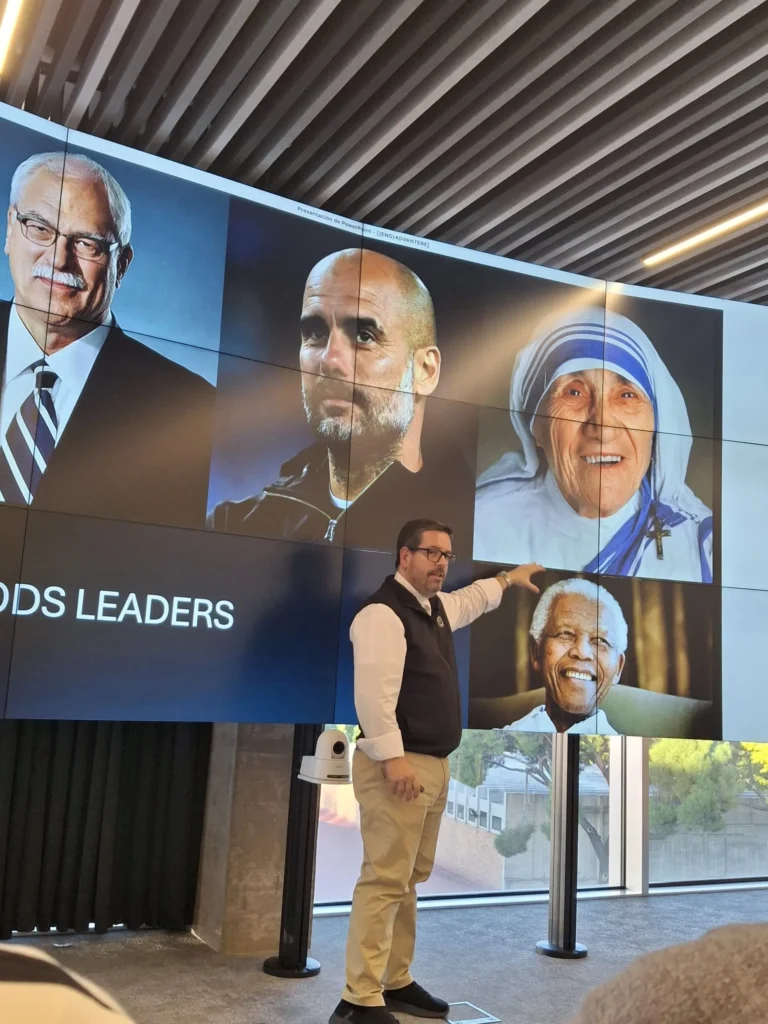




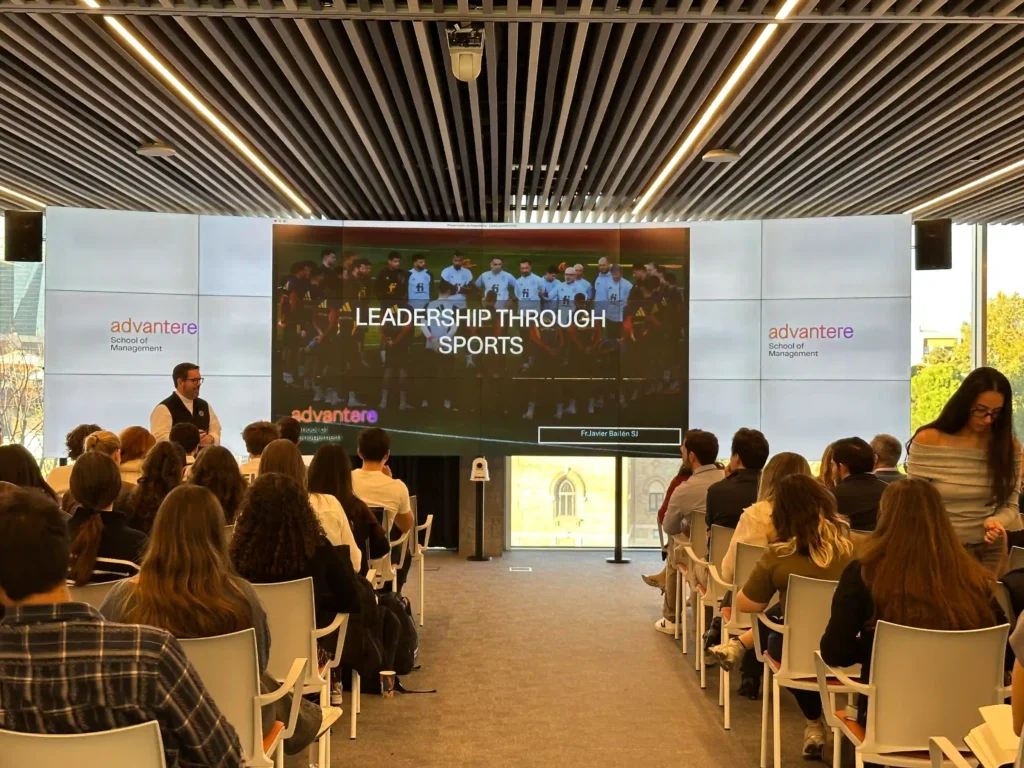
In his lecture “Leadership Through Sports”, Fr. Javier Bailén, SJ explored how sports provide a powerful learning environment for developing authentic, values-driven leadership. Far from being about authority or control, leadership in sports —and in any professional context— is rooted in service, humility, and the ability to empower others.
A leader, he emphasized, is someone who helps people discover and use their talents to contribute meaningfully to a shared goal. Sports, with their intensity, teamwork, and constant feedback, offer an exceptional space to understand what true leadership looks like in action.
Key Insights on Leadership and Teamwork
1. Leadership means helping others shine
Fr. Bailén highlighted that real leaders recognize the strengths and passions of each teammate and encourage them to use those gifts. Leadership is ultimately influencing others positively by enabling them to grow and perform at their best.
2. Humility is the foundation of effective leadership
In sports, ego quickly becomes a barrier to success, “the worst coach,” as he put it. Humility allows leaders to listen, learn, and read the moment with clarity. Even when others make mistakes, humble leadership keeps teams connected, open, and focused on improvement.
3. Motivation grows through recognition and respect
Strong teams are built on small daily gestures: celebrating achievements, correcting in private, and praising in public. This combination fosters motivation, emotional safety, and mutual trust, all essential elements for high-performance environments.
4. Self-awareness creates freedom
Knowing your own strengths and limits reduces insecurity and fosters authentic confidence. Daily habits such as reflection, gratitude, and grounding help athletes, and leaders, remain centered and resilient.
5. Mind, body, and spirit work together
Sports are deeply holistic. Fr. Bailén stressed that physical performance alone is not enough: “You also need God for the marathon.” Spiritual direction and inner balance play a key role in sustaining discipline, well-being, and purpose.
6. Emotional intelligence guides better decisions
Leaders must learn to understand emotions before acting. “Don’t react, respond with freedom,” he noted. Techniques such as conscious breathing, emotional awareness, and calm reflection help maintain focus and harmony in high-pressure moments.
7. Leadership is learned — not inherited
The lecture also challenged common myths: being the loudest, the most competitive, or “born a leader” does not guarantee effective leadership. True leadership develops through practice, humility, and a commitment to justice and love.

Final Reflection
Fr. Javier Bailén’s session offered a powerful and inspiring perspective on how sports can shape leaders who are grounded in values, purpose, and service. His final message, “Always think of what mark you want to leave”, invites us to reflect on the kind of leadership we embody both on the field and in everyday life.
At Advantere School of Management, this approach aligns with our belief that leadership is not only about achieving results, but about transforming people, teams, and communities. Sports become a metaphor, and a training ground, for the leadership our world needs today: humble, impactful, and purpose driven.