




The Employability and Career Services Team hosted an insightful on-campus event on Tuesday, May 12, at Sala Inmersiva, bringing together students and senior professionals from some of the most competitive areas of finance: Mergers & Acquisitions, Structured Finance, and Strategic Consulting.
Rather than focusing only on titles, salaries, or prestige, the session explored what these careers realistically look like on a daily basis, how professionals grow during their first years, and what truly differentiates candidates in highly competitive environments.
The event combined perspectives from experienced industry leaders with practical insights from junior professionals who recently entered the field, creating a balanced and highly valuable discussion for students currently evaluating their future career paths.
Senior Professionals Sharing Real Industry Perspectives
The session featured three senior speakers with extensive international experience.
In Mergers & Acquisitions, José María Arellano, Managing Director at TowerBrook Capital Partners, shared lessons from more than two decades in both investment banking advisory and private equity investing, including experience at Merrill Lynch.
In Structured Finance, Ignacio Ilundain, former Head of Leveraged Finance Iberia at ING, reflected on his experience financing acquisitions for major sponsors such as KKR, CVC Capital Partners, and Cinven, as well as his earlier role at Deloitte.
Representing Strategic Consulting, Juan Calderón, Senior Director at Alvarez & Marsal with previous experience at Bain & Company and Deloitte, explained how consultants help clients make complex business decisions and why trust and long-term relationships are central to the profession.
The First Years: Intensity, Competition, and Growth
One of the strongest themes throughout the event was the idea that the first years of a finance career function as an intensive learning environment rather than simply a job.
José María described investment banking as “hectic and hard,” but emphasized that this intensity becomes the foundation for the next ten to fifteen years of professional development.
According to him, early career professionals must accept frustration as part of growth and understand that competition inside firms is unavoidable. However, he described this competition as healthy when approached with professionalism and discipline.
He encouraged students to actively build visibility within their organizations by helping colleagues, volunteering for tasks, networking internally, and becoming memorable for reliability and attitude rather than only technical ability.
One particularly memorable recommendation was to “make it a commitment to meet as many people as possible in the next ten months,” reinforcing the importance of relationship-building from the very beginning of a career.
Understanding the Business Beyond Technical Skills
Ignacio Ilundain focused less on technical complexity and more on business understanding.
He repeatedly stressed that candidates often spend too much time trying to sound technical while failing to demonstrate a real understanding of the company they want to join.
According to him, strong professionals are able to explain a business model clearly, understand a company’s positioning and strategy, and show how they personally can contribute value.
He explained that before entering a company or attending an interview, candidates should already understand what the business actually does, how it generates revenue, and what strategic challenges it faces.
He recommended building simple business models, analyzing “what-if” scenarios and sensitivities, and learning how to connect personal strengths with business needs.
His perspective highlighted that commercial awareness and analytical thinking are often more valuable than memorized technical vocabulary.
He also noted that after the first five years in finance, careers become significantly more interesting because professionals finally begin to understand the bigger picture and develop a clearer sense of direction.
Consulting, Trust, and Long-Term Relationships
Juan Calderón approached consulting from a more human and strategic perspective.
He explained that consultants ultimately help clients feel confident about making decisions, even when uncertainty exists. In many cases, clients already know what they want to do but need validation, structure, or external perspective before acting.
As a result, consulting is not only about analysis, but also about creating clarity and trust.
One of his most impactful statements was simple:
“Be so good they hire you again.”
He encouraged students not to become discouraged if they fail to secure their first, fifth, or even tenth opportunity, emphasizing that careers are rarely linear.
Consulting, according to him, offers exposure to multiple industries, problems, and business models, allowing professionals to gradually discover what they enjoy and where they perform best.
He also advised students to remain close to people who are smarter and more experienced because growth often happens through surrounding oneself with high-performing individuals.
Social Capital, Emotional Intelligence, and Professional Growth
Another major topic discussed during the session was the importance of social capital and emotional intelligence in corporate environments.
All speakers agreed that the most successful professionals are not necessarily the smartest academically, but often the most proactive, reliable, and socially adaptable.
Building trust with clients and colleagues was presented as a critical long-term advantage.
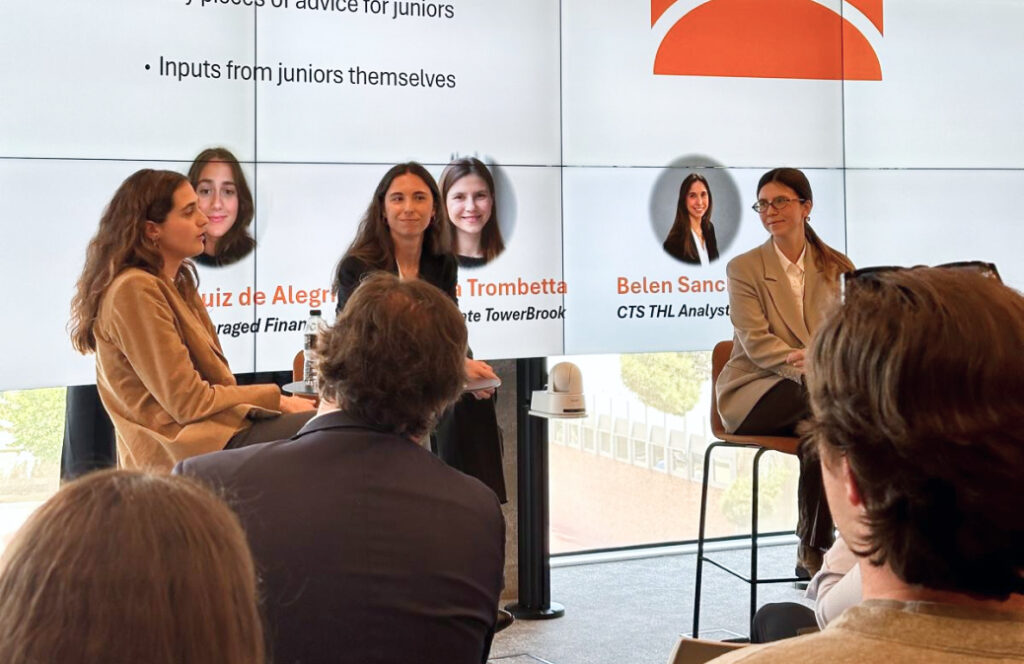
Junior professionals participating in the panel reinforced this perspective by explaining that initiative and visibility matter enormously for interns and analysts.
Doing more than expected, volunteering for additional responsibilities, and contributing ideas rather than only identifying problems were repeatedly mentioned as behaviors that accelerate growth.
The panelists also stressed the importance of developing relationships across different seniority levels within a company, since mentorship, advice, and informal support networks often influence career progression more than students initially expect.
Resilience, Balance, and the Human Side of High Performance
An especially valuable aspect of the discussion was the realistic approach toward mental resilience and work-life balance.
While the speakers openly acknowledged the demanding nature of finance and consulting careers, they also highlighted the importance of maintaining a life outside work.
Having close friends, hobbies, and routines unrelated to the office was described as essential for remaining grounded and avoiding burnout.
One recurring message was simple but powerful: people who constantly complain damage both team morale and their own professional image.
Instead, the speakers encouraged students to focus on becoming reliable, proactive, and solution-oriented.
If problems arise, employees should attempt to propose solutions rather than simply transferring difficulties onto colleagues.
Thinking critically before asking questions, preparing thoroughly, and always making an effort before seeking help were also presented as signs of maturity and professionalism.
Technology, Adaptability, and Future Careers
The junior representatives added an especially relatable perspective by discussing the transition from university into demanding corporate environments.
They described the first months as a “crash course in humility and hustle,” where adaptability and attention to detail become essential.
Several panelists emphasized that artificial intelligence and emerging technologies will significantly transform the industry in the coming years, making technological adaptability increasingly important.
At the same time, they argued that human qualities such as communication, trustworthiness, and critical thinking will remain fundamental differentiators even in highly automated workplaces.
A More Realistic View of Finance Careers
Overall, the event provided students with a realistic and intellectually honest overview of modern finance and consulting careers.
Rather than presenting idealized corporate narratives, the speakers focused on practical behaviors, long-term thinking, and professional discipline.
The discussion demonstrated that technical knowledge alone is not enough to succeed in competitive industries. Sustainable career growth depends equally on business understanding, emotional intelligence, adaptability, initiative, and the ability to build trust over time.
The networking cocktail reception following the presentations further reinforced the collaborative atmosphere of the event, giving students the opportunity to continue conversations directly with professionals and peers in a more informal setting.
For many attendees, the session offered not only career advice, but also a clearer understanding of the mindset required to grow successfully in high-performance professional environments.