

What does it take to reimagine how capital flows in Mexico — and pitch it to international experts in Madrid?
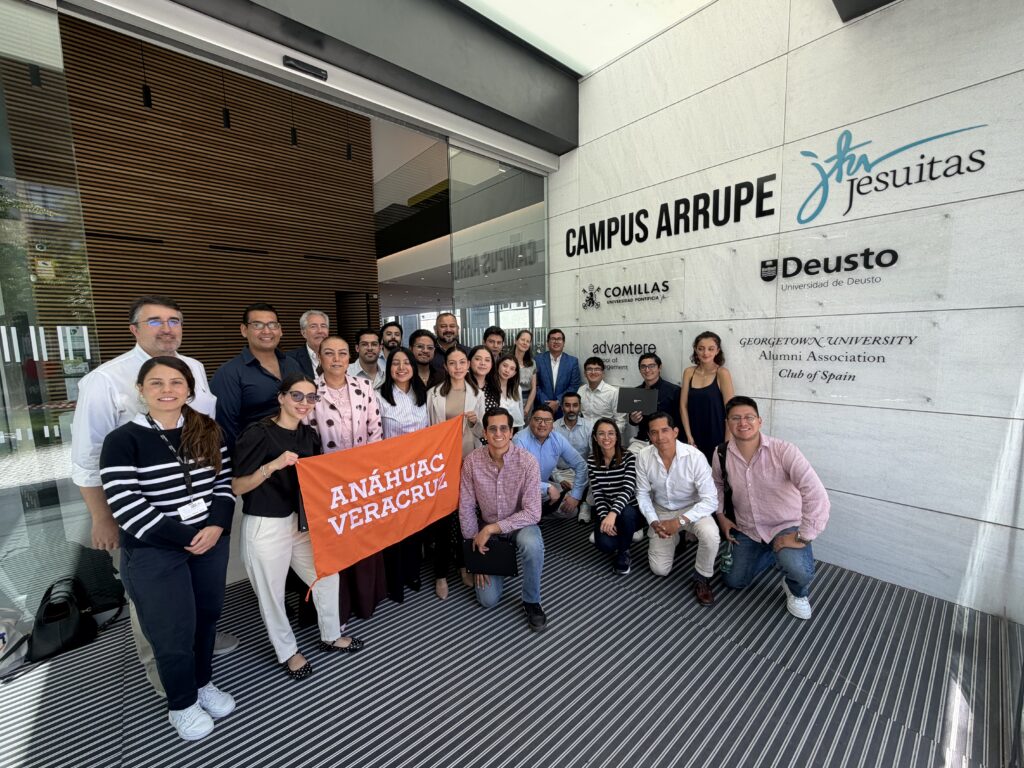
That was the challenge facing students from Universidad Anáhuac Veracruz during their Study Tour at Advantere School of Management. Over several intensive days, finance and economics students didn’t just study global trends: they applied them, debated them, and built something new with them.
The result was one of the most grounded, practice-driven international programmes Advantere has hosted — and a turning point for many of the students who took part.
Finance Is No Longer Just About Numbers
The programme brought together students from the Master’s in Finance, the Master’s in Economics and Business, and undergraduate degrees in Financial Management and Finance and Public Accounting.
The academic agenda was deliberately forward-looking, built around the forces that are already reshaping the financial sector:
- Artificial Intelligence applied to Finance
- Blockchain and Fintech
- Bonds and Credit Ratings
- Financial Inclusion
- Pension Systems
- Banking Regulation and Basel III
- Impact Finance and Tokenisation
These weren’t abstract topics handled through slides and case studies. Expert-led sessions pushed students to think about how technology, regulation and innovation intersect in real decisions — the kind that professionals face every week.
For Sebastián Velasco Guzmán, a Master’s in Finance student, the shift in perspective was immediate:
«The programme helped us better understand how artificial intelligence is transforming decision-making, data analysis and financial management.»
The sessions made something clear that textbooks often don’t: modern finance requires technological fluency, strategic judgment and an awareness of the human consequences behind every financial decision.
Inside Allianz and ILUNION: Strategy in Practice
Classroom sessions were only half the picture.
The Study Tour included visits to two organisations that offered contrasting — and complementary — views of how business strategy plays out in the real world.
At Allianz Spain, students gained direct exposure to how a global financial and insurance group navigates constantly shifting market conditions, regulatory environments and customer expectations.
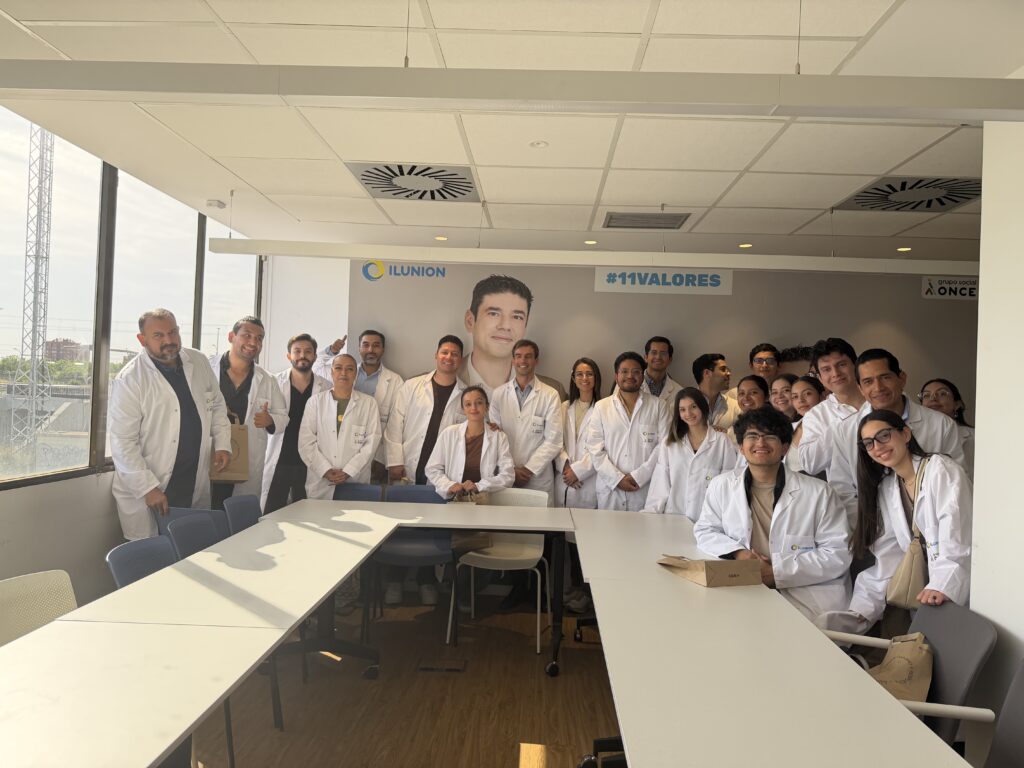
The visit to ILUNION TextilCare offered something different: a close look at how innovation, sustainability and social inclusion can coexist with competitive performance. ILUNION’s model — built on employing people with disabilities as a core business principle, not a CSR footnote — challenged students to reconsider what «value creation» actually means.
As Shareny Vázquez Fonseca put it:
«These visits allowed us to see how the concepts studied in class are reflected in real organisations and to better understand the connection between theory and practice.»
The Proposal That Stole the Show: A Mexican Social Stock Exchange
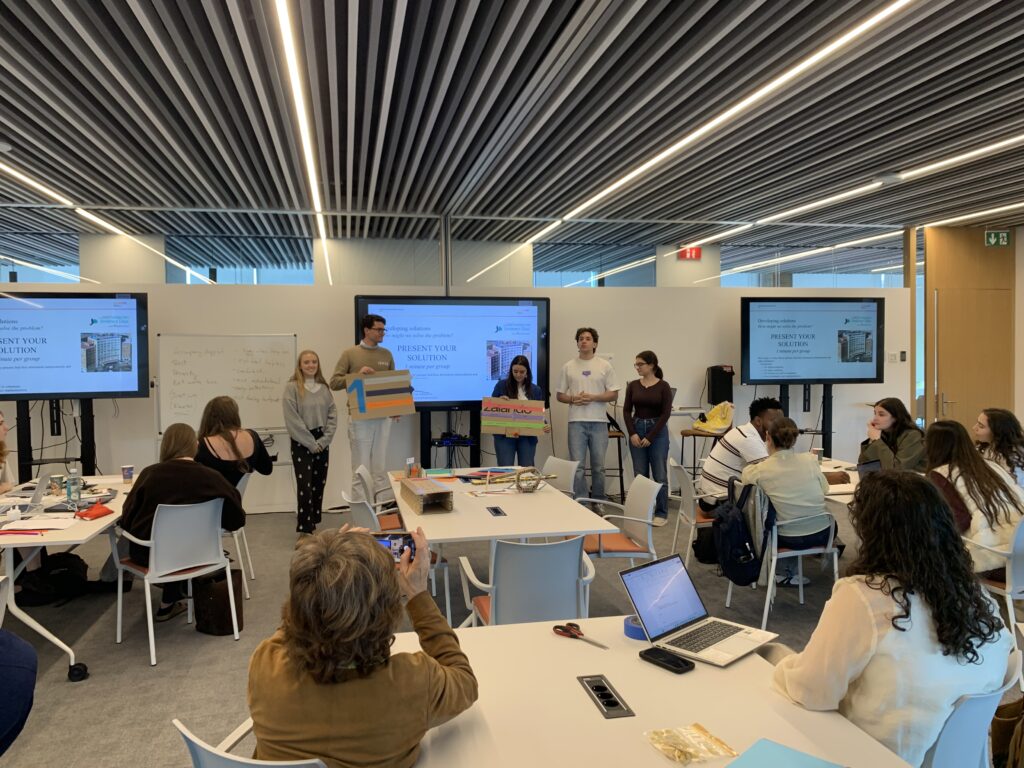
The centrepiece of the programme was the «Design Your Financial Initiative» project — a challenge for multicultural student teams to develop and present original responses to real financial-sector needs.
One team’s proposal stood out: a Mexican Social Stock Exchange, designed to expand investment alternatives, strengthen financial education and generate opportunities for companies across all sizes. The concept fused impact finance with market mechanics — and it earned serious attention from the academics and specialists who evaluated the presentations.
But beyond the specific idea, the project forced every participant to do something harder than financial modelling: communicate clearly under pressure, defend their reasoning, and respond to expert pushback in real time.
For Shareny, the most important lesson didn’t come from a session on blockchain or Basel III:
«One of the lessons I take with me is that the best ideas are not always the most complex. Often, keeping solutions simple and clear is what allows them to truly work.»
What Madrid Adds That No Classroom Can
At the start of the programme, a professor shared a line that many students carried with them through the week: «Embarrassment limits you, and fear paralyses you.»
It was a deliberate provocation — an invitation to take risks in conversations, presentations and interactions that students wouldn’t otherwise have outside their home institution.
Beyond the academic content, time in Madrid and Toledo gave students a broader cultural context for the concepts they were studying. Financial inclusion means something different when you’re discussing it in a country with its own complex history of economic inequality. Pension system design looks different when you’ve had lunch with a professional who lives inside the system you’re analysing.
For Isabella Laynez Hernández, the programme’s value was inseparable from that immersive dimension:
«At the beginning, you may think it is only an exchange of academic knowledge. By the end, you leave with a much broader vision. Learning is strengthened, while essential skills such as effective communication, teamwork, strategic thinking and leadership are developed.»
International Education That Changes How You Think About Your Career
Study Tours at Advantere are designed around a specific idea: that the most important learning happens when students are pushed to apply knowledge, not just receive it.
That means working in multicultural teams with people from different academic backgrounds. It means presenting in front of specialists who will challenge your assumptions. It means visiting organisations where the strategy you studied in class is running in real time — and seeing where theory holds, and where it doesn’t.
For Arlette Estefanía Guillén Medina, the programme delivered exactly that:
«It is an intensive programme that combines academic excellence with cultural immersion, designed for those who want to discuss global financial perspectives, discover international trends and develop projects with real impact.»
Students from Universidad Anáhuac Veracruz left Madrid with more than an updated view of fintech, AI and impact finance. They left with greater confidence in their own capacity to think across borders — and a clearer sense of what kind of finance professionals they want to become.
That is what international education is for.